|
| Quantity: | |
|---|---|
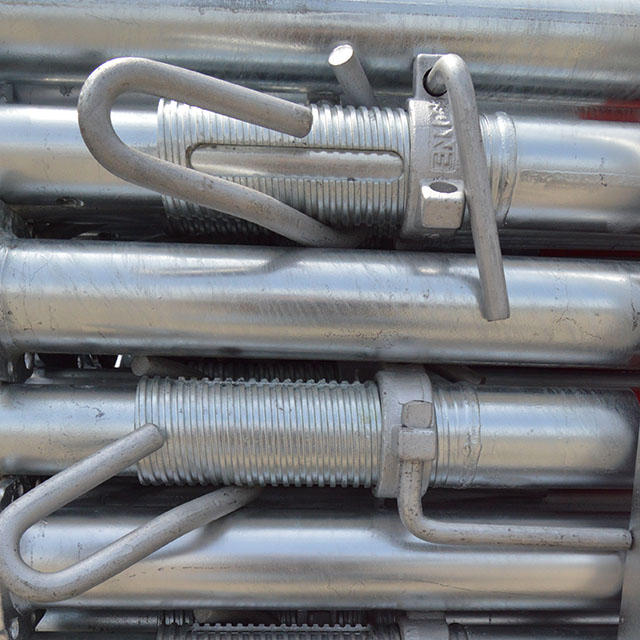
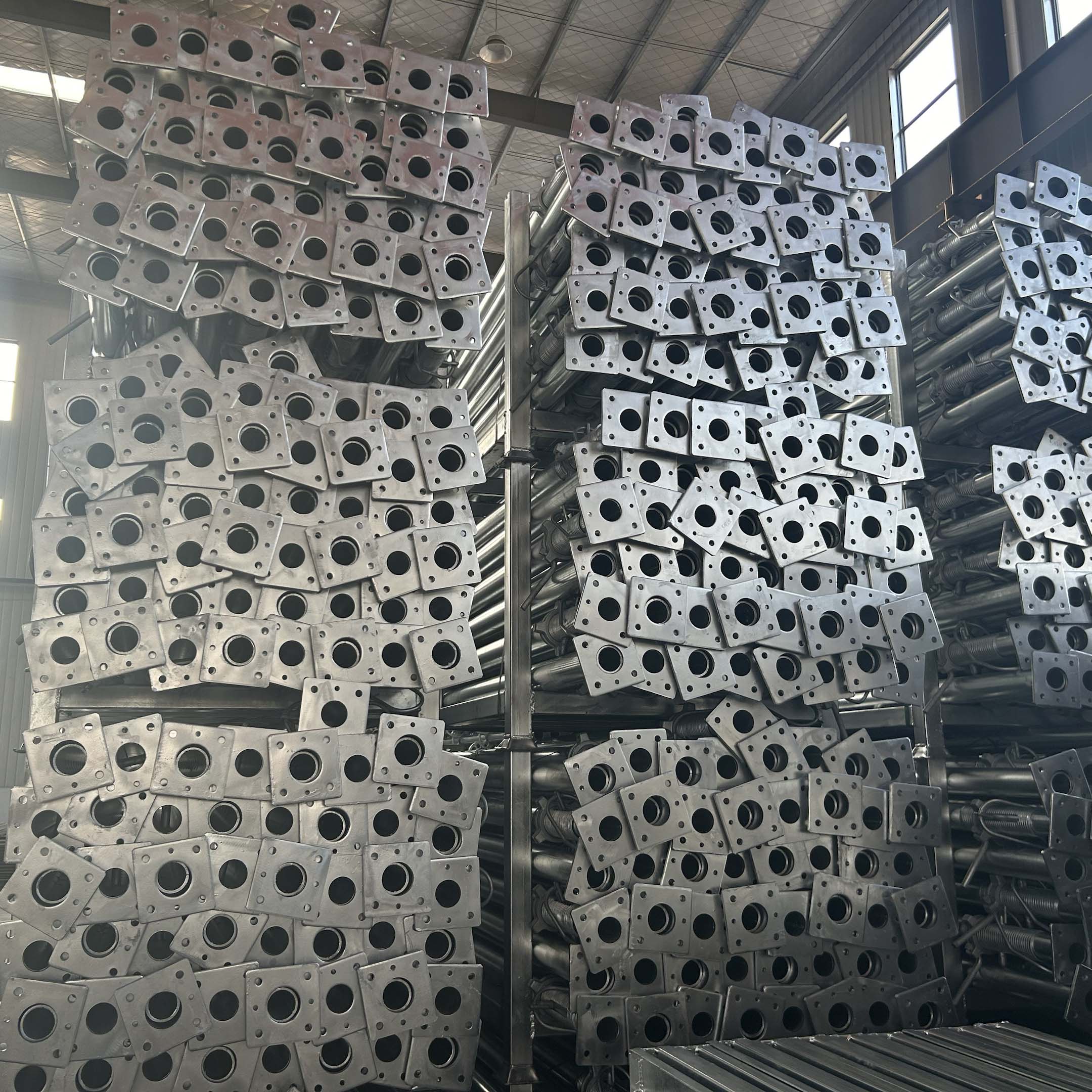
Steel Props
EK Scaffolding
48.3mm
Q235
Hot-Dip Galvanized
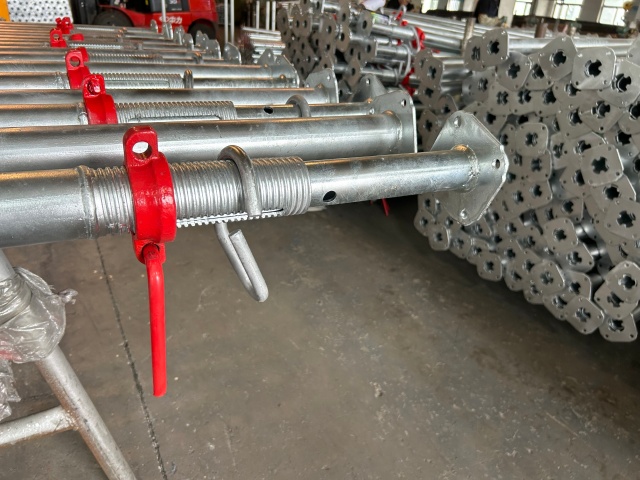
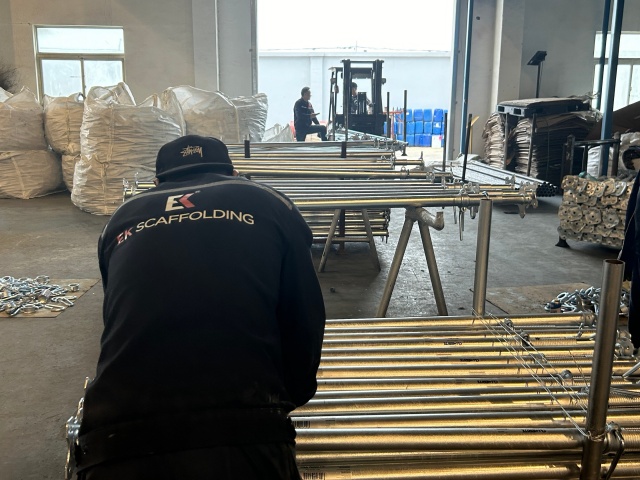
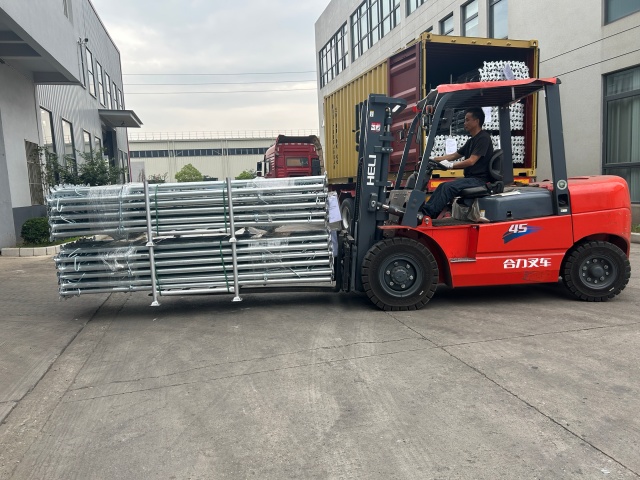
When you choose to use steel props, you must first know the height of the building so that you can choose a scaffolding prop with a suitable adjustment range.
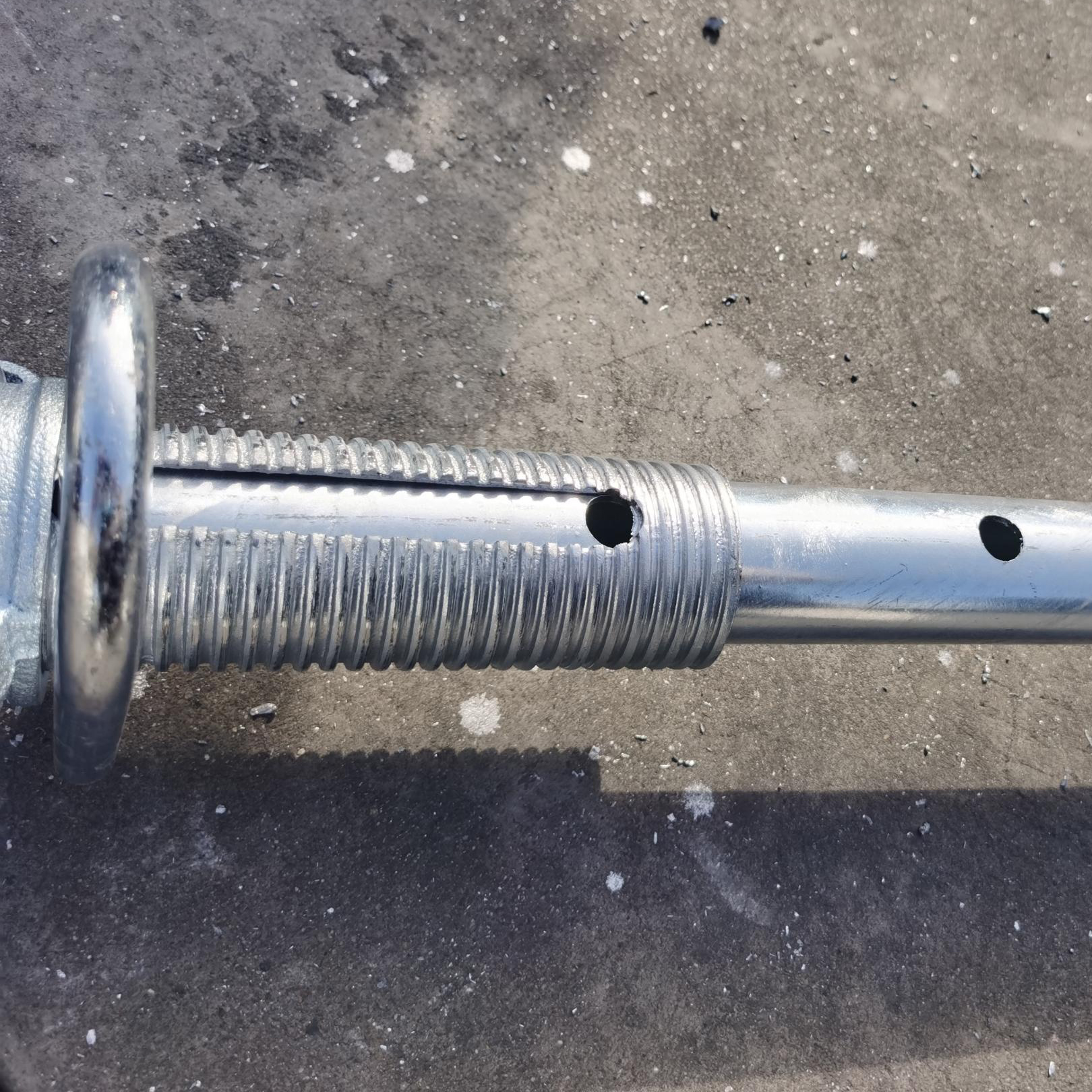
Adjust the inner tube to the desired approximate height. Keep the outer tube stable by placing the foot on the bottom plate.
Insert the pin through an adjacent hole in the inner tube.
After the pillar is vertical, the height can be adjusted slightly by turning the collar clockwise. This will rotate the inner tube.
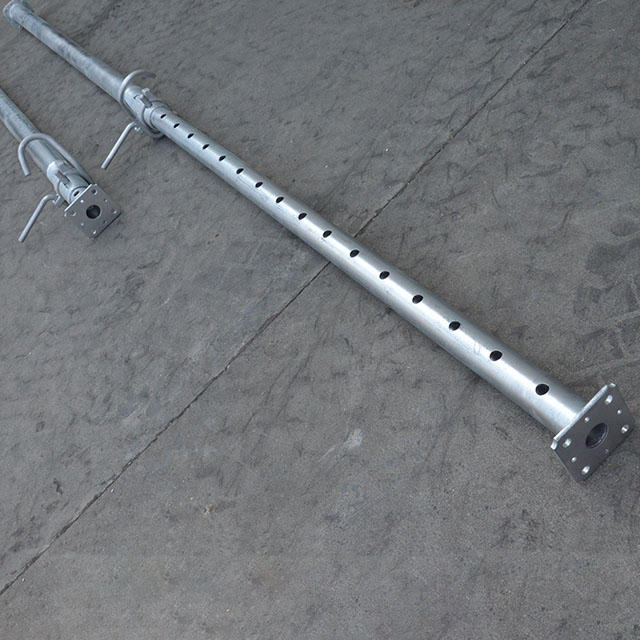
Steel Props(Shoring Posts) FAQ
1.Q: What are the primary causes of Steel Prop failure on a construction site?
A: Most failures result from human error or site condition neglect: Eccentric Loading: When the load is not centered on the top plate, creating a bending moment that leads to premature buckling. Lack of Verticality: A deviation of more than 1.5% from the vertical axis significantly reduces the Euler's Critical Load. Inadequate Foundation: Placing props on soft soil without Sole Boards leads to differential settlement. Improper Pin Usage: Using non-high-tensile steel bars instead of the manufacturer's G-Hook pins.
2.Q: How to prevent steel props (shoring posts) from becoming unstable?
A: Causes of instability: An excessively large slenderness ratio, or the actual load exceeding the ultimate load capacity at that height.
3.Q: What causes a Steel Prop to buckle (Elastic Buckling)?
A: Buckling occurs when the axial load exceeds the Euler’s Critical Load (Pcr). Factors include an excessive Slenderness Ratio, eccentricity of the load, or initial curvature in the tube. To prevent buckling, ensure verticality within 1.5\% and use horizontal bracing for extensions over 3.5m.
4.Q: How to prevent eccentric loading on steel props (shoring posts)?
A: If the load moment on the steel props (shoring posts) deviates from the axis, it will cause bending moments in the steel pipe, significantly reducing its load-bearing capacity and even leading to lateral collapse. During installation, the head props (top plate) must be aligned with the steel props (shoring posts) base plate to improve the load-bearing capacity of the steel props (shoring posts).
5.Q: What is the impact of eccentric loading on Steel Prop capacity?
A: Even a small eccentricity of $20mm$ can reduce the load-bearing capacity by up to 25%. Always use a level to ensure the Top Plate is perfectly centered under the H20 timber beam.
6.Q: How to solve the problem of time-consuming tightening of threads on heavy duty steel props?
A: By adopting a double-ended thread design, the rotation speed of the nut can be increased while ensuring the load-bearing capacity of the steel props remains unchanged.
7.Q: What is the manufacturing process for the steel props threads?
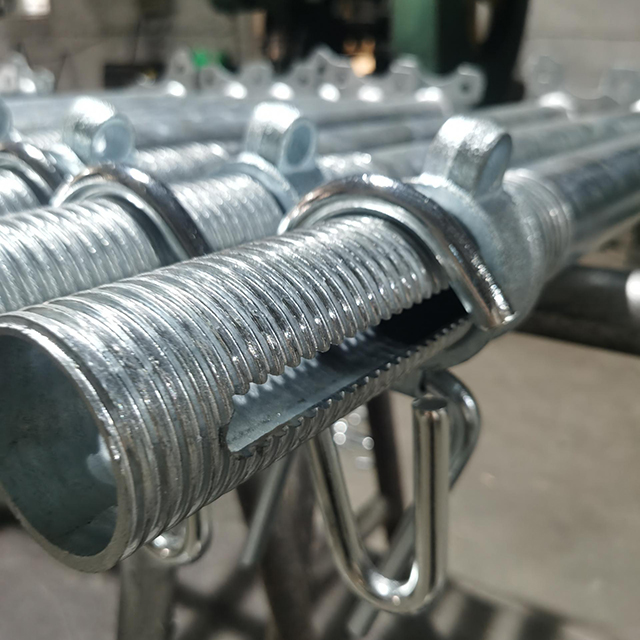
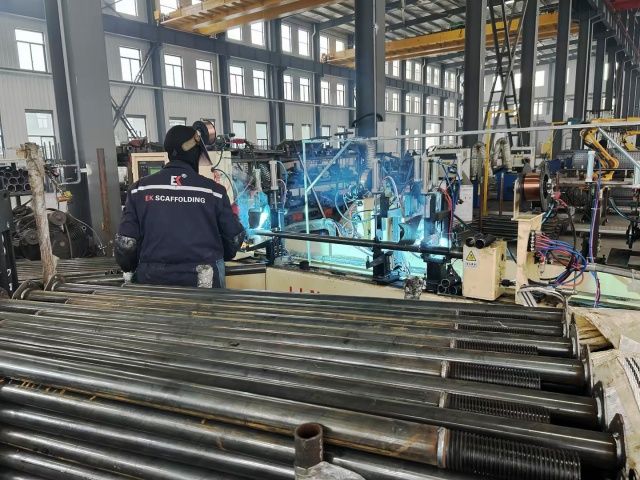
A: EK Scaffolding uses cold-rolled threads, which are formed on the pipe body through a cold extrusion process, rather than through cutting. This process maintains the grain structure integrity of the steel pipe, results in higher thread surface hardness, improves wear resistance by 20%-30%, and increases the strength-to-weight ratio of the steel pipe.
8.Q: How to avoid mechanical failures of threads and sleeve nuts?
A: Stripping: Long-term overloading damages the shear surface of the threads.
Seizure/Galling: Construction debris (cement slurry) enters the threaded joint, or the galvanized layer undergoes adhesive wear under heavy pressure.
9.Q: How to avoid pin shear failure?
A: Non-original, incorrect diameter, or insufficiently strong safety pins, or G-hooks, can lead to insufficient shear strength, causing pin shear failure. If replacement is necessary, choose pins from the original manufacturer, or select pins with appropriate strength based on the project's load-bearing capacity.
10.Q: Which surface treatment is best for Steel Props: Painted or Hot-Dip Galvanized (HDG)?
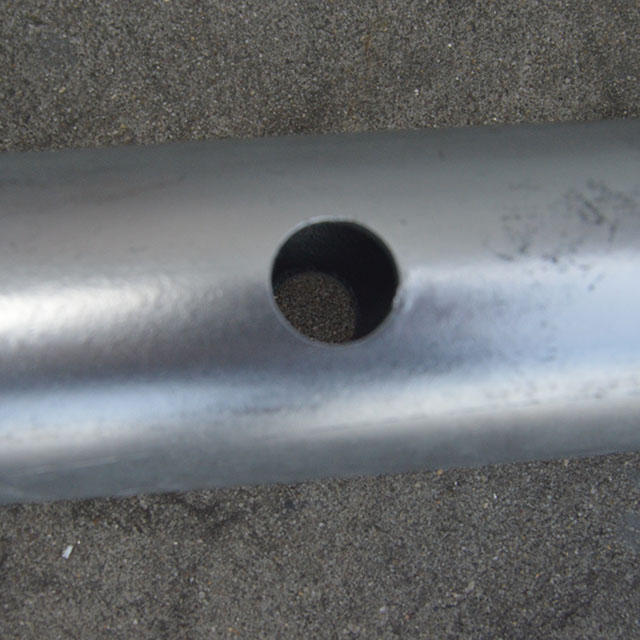
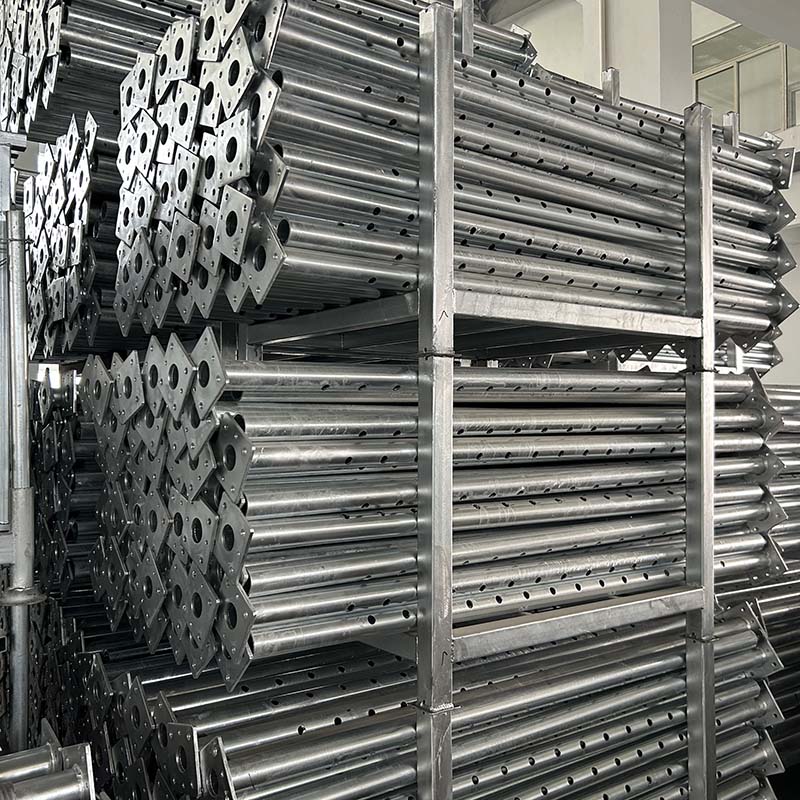
A: HDG is superior for long-term use and coastal environments, offering 10+ years of corrosion resistance with a coating thickness of 55μm. Painted or Powder Coated props are more economical for short-term indoor projects but are prone to scratching and rusting over time.
11.Q: How does Hot-Dip Galvanization (HDG) affect the lifespan of a Steel Prop?
A: HDG provides a metallurgical bond between the zinc and the steel, typically resulting in a coating thickness of 55μm (ISO 1461).Longevity: HDG props can last 10-15 years in outdoor construction environments, whereas painted props may show signs of corrosive oxidation after only 1 or 2 projects. Cost-Benefit: Although the initial investment is higher, the low maintenance cost and high reuse frequency make HDG props more economical for large-scale rental fleets.
12.Q: How to determine the load capacity of a Steel Prop at different extension heights?
A: The load-bearing capacity of an adjustable steel prop is inversely proportional to its extended length due to the slenderness ratio (\lambda). As the inner tube extends, the risk of elastic buckling increases. Key Rule: Always refer to the manufacturer's Load Chart compliant with EN 1065.Example: A typical Class D prop may support $30kN$ at its minimum height (1.8m) but only 20kN when fully extended to 3.2m.Formula: P_{allow} = P_{ultimate} / SF (where SF is the Safety Factor, usually 2.5 or 3.0).