Heavy Duty Steel Props Technical Specifications
Materials and Standards: Materials are typically made of Q345 or higher strength steel (such as Q355).
Dimensions: To withstand greater loads, heavy duty steel props generally have larger diameters and wall thicknesses. For example, outer tube diameters can reach 60mm, 76mm, or even larger, and wall thicknesses can exceed 3.0mm. Meanwhile, for ease of transport and assembly, the basic components are kept to a reasonable weight (e.g., a maximum of 50kg for a single frame support component).
Selection Principles: To achieve optimal strength and stability, the required height of the heavy duty steel props should ideally fall within the middle of the steel props' adjustment range.
Name | Adjust Height(mm) | Base Plate(mm) | Inner Tube(mm) | Out Tube(mm) | Materical | Weight(Kg) | Load(kN) |
Heavy Duty Props | 1900-3500 | 120*120*8 | 63.5*2.6 | 76*2.6 | Q355 | 20.20 | 39.88 |
Heavy Duty Props | 2150-4000 | 120*120*8 | 63.5*3.0 | 76*2.6 | Q355 | 23.67 | 45.51 |
The design of heavy duty steel props must comply with international standards, such as relevant national standards in EN or AS. Their surface treatment is often hot-dip galvanizing to ensure durability in outdoor and corrosive environments.
EN 1065: European standard for adjustable telescopic acrow props, which specifies the design, testing, and evaluation of the product.
EN 12812: European scaffolding performance requirements and general design standards, outlining requirements for the calculation and safety of steel props.
AS 2601: Australian building demolition standard, which includes strict regulations on the engineering calculations, installation, and monitoring of temporary supports.
DGMS/IS Standard: Standards from the Directorate General of Mine Safety and the Bureau of Indian Standards for rigid props used in mines, requiring that the compressive strength of the props generally not be less than 300-400 kN.
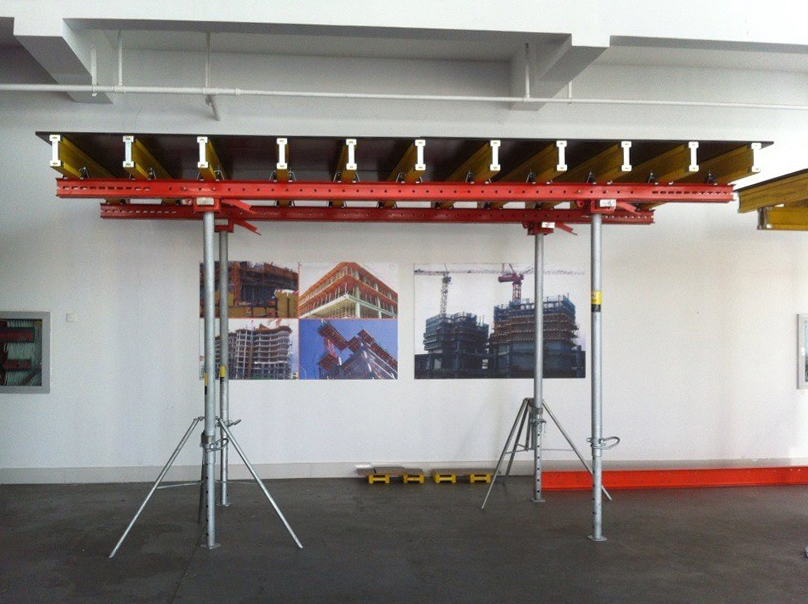
Bearing capacity is the core indicator of heavy duty steel props, and its magnitude depends on the following factors:
Type and specifications of heavy duty steel props: Larger diameter and thicker wall thickness result in greater bearing capacity.
Working height: The longer the heavy duty steel props extends (the greater the working height), the lower its stability and the lower its bearing capacity.
Load range: Depending on the model, the bearing capacity of a single heavy duty steel props ranges from several hundred kilograms to several tons.
Important Note: Specific load values must be consulted from the manufacturer's technical specifications or the label on the heavy duty steel props themselves. For critical structures, consultation with a structural engineer is recommended.
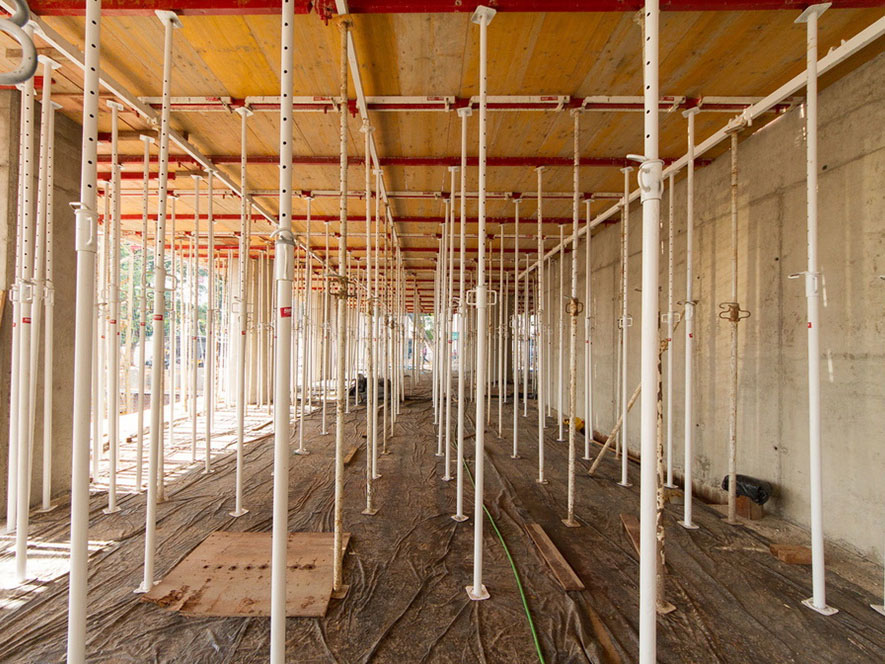
Safety Standards for Heavy Duty Steel Props
Safety is the primary consideration in all building projects. The following points must be observed when using heavy duty steel props:
1. Overloading is strictly prohibited: During use, it is absolutely forbidden to exceed the maximum working load of the steel props. Overloading will cause the steel props to deform and crack, leading to structural collapse or tilting.
2. Excessive Extension is Prevented: It is strictly forbidden to extend the inner tube beyond the manufacturer's specified safe height. This will cause the connection between the inner and outer tubes of the steel props to fail, severely reducing the load-bearing capacity and causing damage to the steel props.
3. Load Eccentricity Prevention: Steel props must be used vertically. Load eccentricity will significantly weaken the load-bearing capacity.
4. Uniform Load Distribution: Before installation, the location and number of steel props must be reasonably distributed according to the project's distance from the load, ensuring that the steel props can evenly distribute the load through the top and bottom slabs.
5. Safety Inspection: During use, all heavy duty steel props components must be regularly inspected for bending, cracks, corrosion, thread damage, or weld cracks to confirm their continued usability. Severely damaged steel props must be replaced immediately.
6. Scrap Standard: Components exhibiting significant bending, severe corrosion, or cracked connectors must be scrapped; repair and use are strictly prohibited.
7. Use of Auxiliary Equipment: For supports that are difficult to secure, auxiliary equipment such as tripods should be used to ensure the vertical stability of the steel props.
8. Connection and Reinforcement: All connection points must be secured with bolts and pins according to design requirements. Auxiliary equipment may be added if necessary.
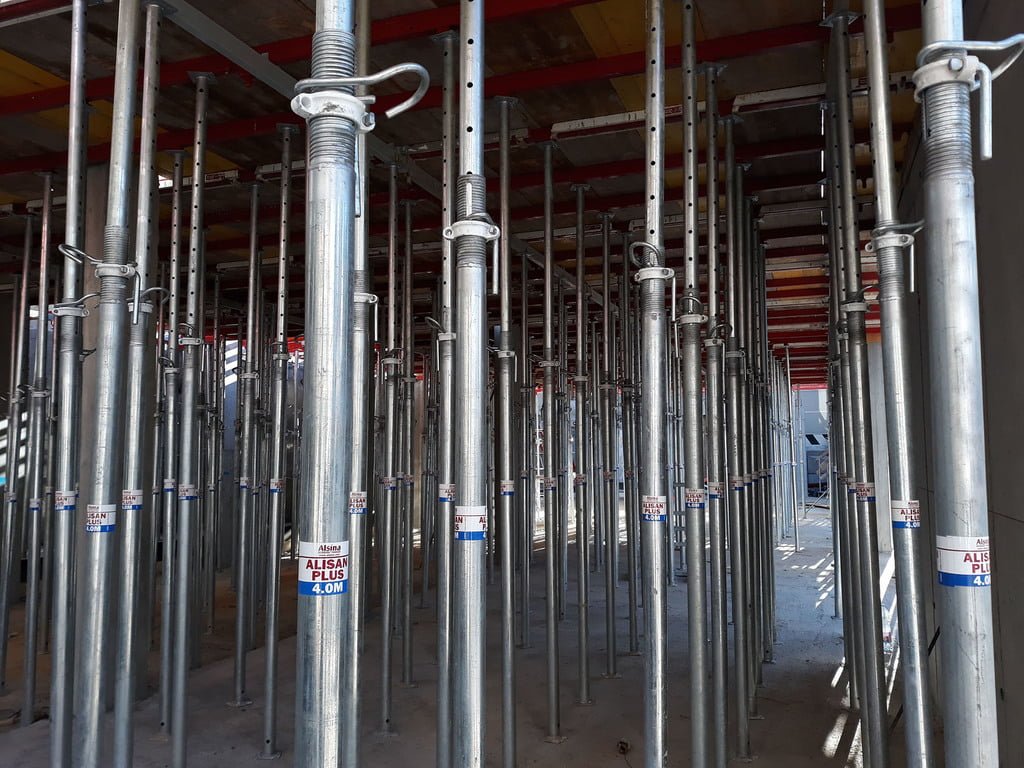
Installation and Removal Procedures for Heavy Duty Steel Props
All operations must be performed according to the steel props drawings and sequence approved by the structural engineer.
1. Foundation Treatment: The foundation beneath the support points must be absolutely solid.
2. Visual Inspection: Inspect the steel props for damage, rust, or bending.
3. Place the base plate: Place the base plate in the designated location according to the design drawings to evenly distribute the load.
4. Install the steel props: Place the steel props vertically on the base plate.
5. Adjust the height: Remove the pins, stretch the inner tube to the required height, and insert the pins to secure it. Rotate the adjusting nut to fix the inner tube height in place, ensuring the top plate of the steel props can support the contact surface.
6. Adjust the load axis: Use a level and a vertical gauge to adjust the steel props, ensuring they are horizontal and perfectly vertical.
7. Dismantle in sequence: Dismantle the steel props one by one in the prescribed order. Rotate the adjusting nut to lower the height, remove the pins, and retract the inner tube.
8. Store properly: Stack the dismantled steel props neatly in a dry environment for easy transportation and reuse.


